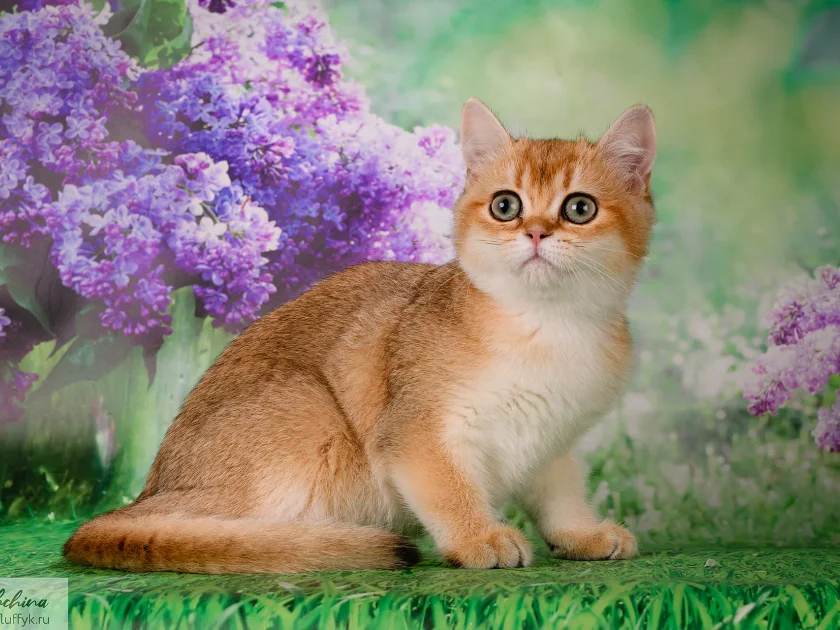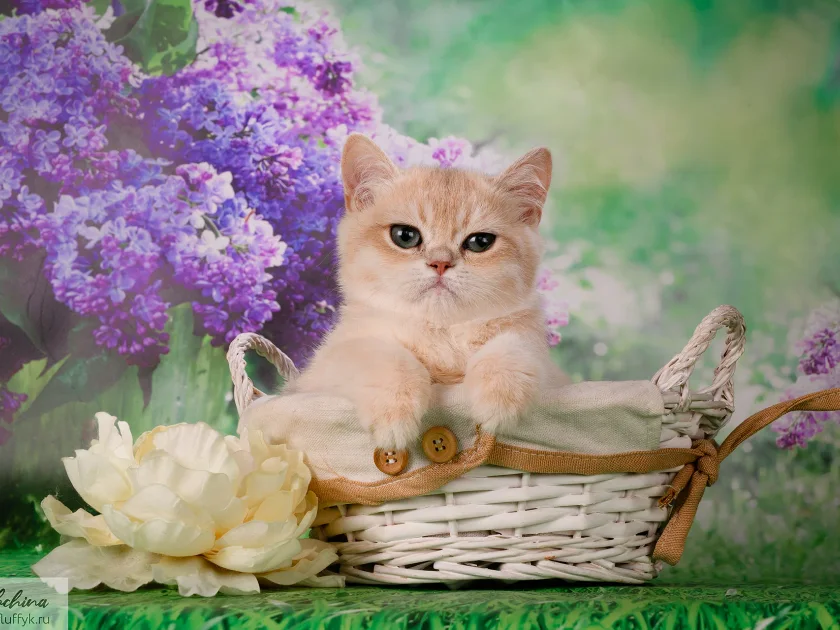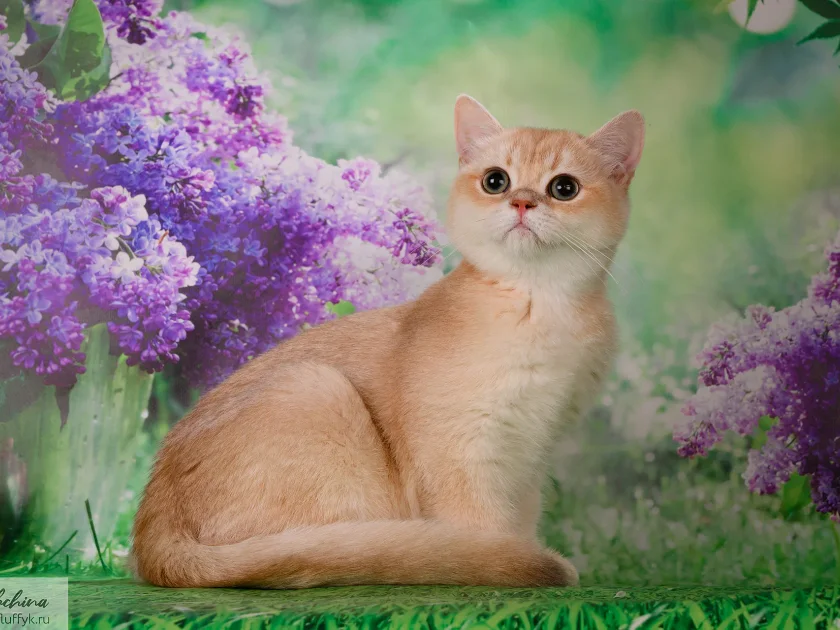
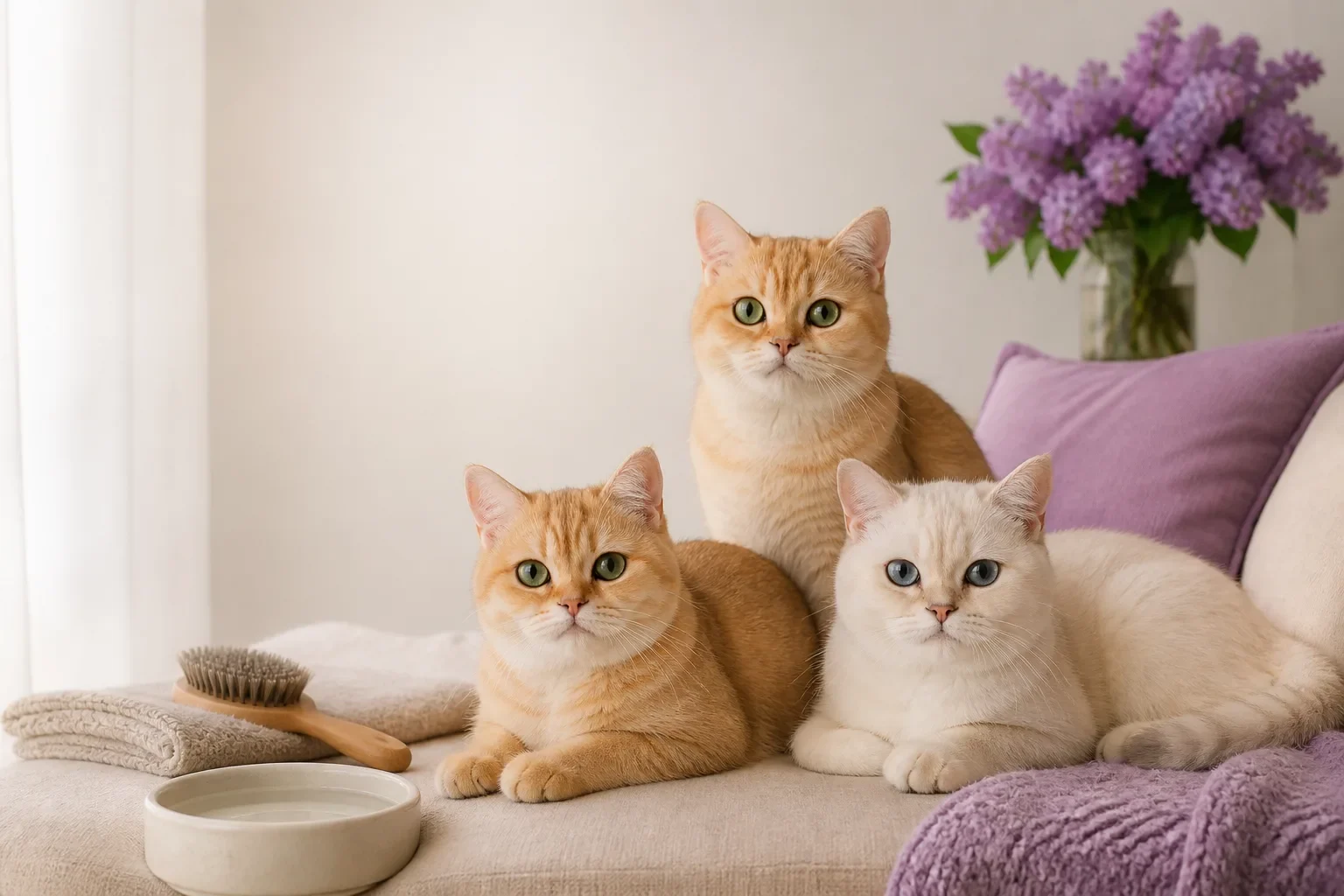
Coat, weight, activity and health checks — what to know to keep a British Shorthair healthy and fit.
Coat and shedding
The dense undercoat needs brushing once a week, and two to three times a week during shedding season. A deshedding brush or a grooming glove works well. British Shorthairs don't need frequent bathing: the thick coat is slow to wet and slow to dry, so a few times a year, or as needed, is enough.
Diet and weight
The breed is prone to gaining excess weight, especially after neutering or spaying. Food should match age and activity level, with measured portions rather than a bowl left full all day. Extra weight puts direct strain on the heart and joints, so it's worth tracking weight regularly rather than only at the vet's.
Activity and play
A calm temperament doesn't mean the cat needs no exercise. Ten to fifteen minutes of active play twice a day — with a wand toy, a ball or a laser pointer — keeps it fit and engaged. A scratching post and a spot to watch the world through a window cover the basic need for movement and curiosity.
Health and prevention
The breed has a hereditary predisposition to hypertrophic cardiomyopathy (HCM) and polycystic kidney disease (PKD) — a responsible breeder screens the kitten's parents for both. An annual vet check-up, timely vaccination and parasite prevention remain essential regardless of breed.
A cat-safe home
The litter box, scratching post, sleeping spot and bowls are best spread across different corners rather than grouped together. Open windows and balconies should be fitted with a safety net — curiosity often outweighs caution.